

Inquiry
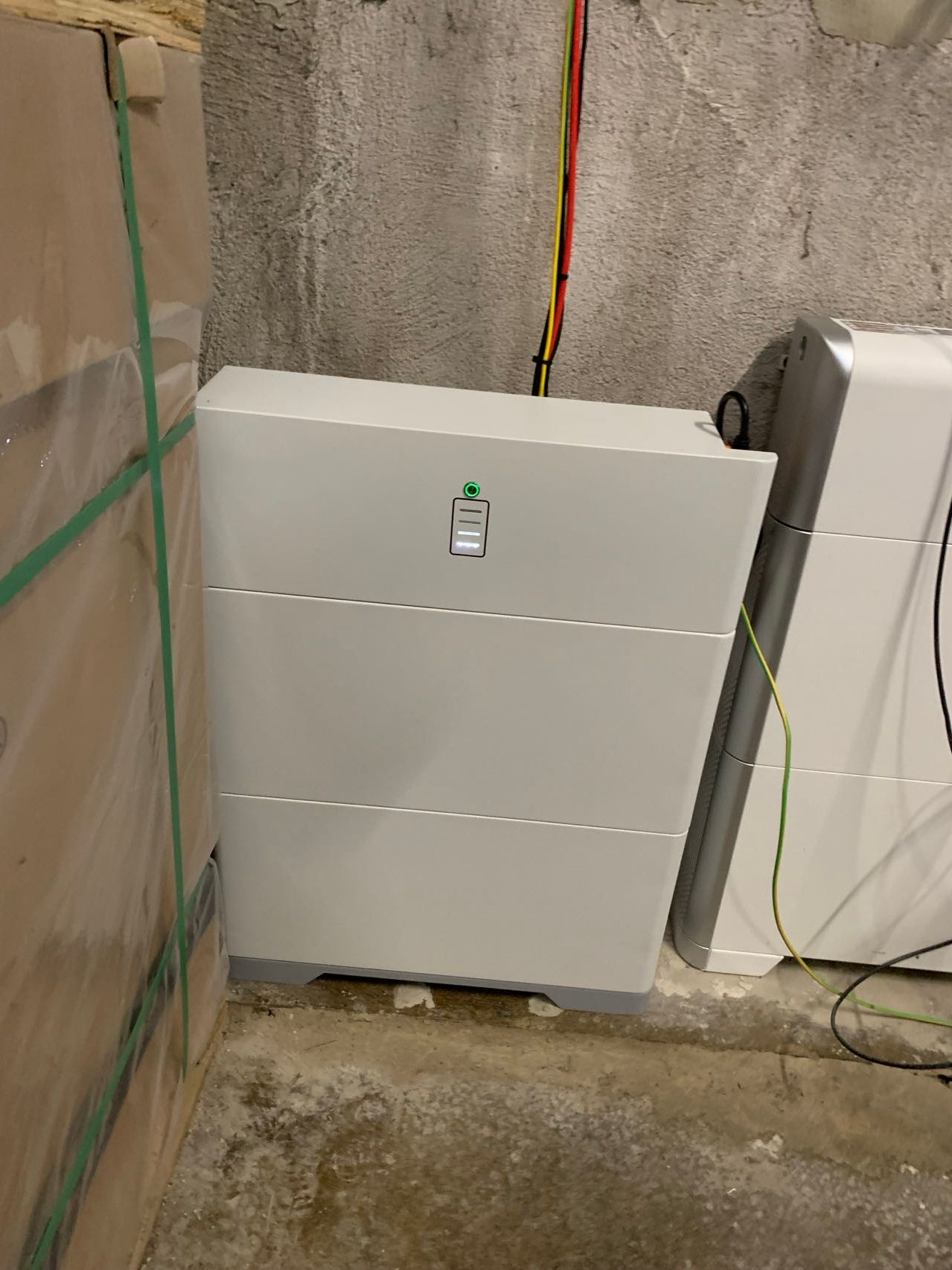
UK Residential ESS ODM Case Study: Developing a High-Voltage Home Battery System for Private-Label Energy Brands
Project Overview
| Item | Details |
|---|---|
| Target Market | United Kingdom |
| Product | ACE RESS-E20-H0 High-Voltage Residential ESS |
| Battery Chemistry | LiFePO4 |
| Capacity Range | 7.6kWh–113.6kWh |
| Application Scenarios | Solar self-consumption, backup readiness, EV charging support, heat pump-ready home energy storage, and smart tariff energy management |
| Core Customization Requirements | Adaptation to selected UK residential inverter ecosystems, CAN/RS485/Modbus communication support, BMS data mapping, scalable high-voltage capacity design, installer-facing documentation, and private-label launch support |
Background
The UK residential energy storage market is moving from simple solar battery backup toward integrated home energy management.
For many UK homeowners, a battery system is now expected to support rooftop solar self-consumption, evening electricity demand, EV charging, heat pump usage, and time-of-use electricity tariffs.
A UK-focused residential energy storage brand approached ACE Battery to develop a private-label high-voltage home battery platform for its own product line. The customer was not looking for a standard battery product for resale. Instead, it needed an ODM partner capable of supporting battery platform development, inverter communication adaptation, BMS data mapping, installer-facing documentation, and private-label product delivery.
Customer Challenges
The customer needed more than a standard residential battery product. To launch a private-label ESS platform for the UK market, it had to solve several practical challenges related to inverter integration, installer deployment, capacity scalability, and product launch readiness.
1. Local Inverter Compatibility and Communication Risk
In the UK residential solar-plus-storage market, installers may use different hybrid inverter platforms depending on project size, PV configuration, and homeowner requirements.
The customer needed the battery system to support communication adaptation planning for selected inverter ecosystems commonly used in UK residential projects, such as Solis, Sunsynk, GoodWe, FoxESS, Victron, GivEnergy, Growatt, and other project-specific hybrid inverter platforms.
The challenge was not only whether the battery had CAN or RS485 ports, but whether the battery BMS could exchange data with selected inverters through compatible protocol logic.
2. Installer Commissioning and After-Sales Complexity
For the customer, successful market entry depended on whether local installers could install, configure, and troubleshoot the system efficiently.
Without clear wiring guidance, communication cable instructions, commissioning notes, inverter integration references, and fault troubleshooting documents, installer errors could increase deployment time and after-sales pressure.
3. Scalable Capacity for UK Home Electrification
The customer’s target users included UK homes with rooftop solar, EV chargers, heat pumps, home offices, and higher evening loads.
Therefore, the battery platform needed to support scalable capacity and long-term expansion instead of being limited to a single fixed-capacity configuration.
4. Private-Label Market Launch Readiness
As a residential ESS brand, the customer needed a complete private-label product package, not only battery hardware.
This included product configuration, appearance customization, product labeling, packaging support, technical datasheets, user manuals, installation guides, and installer-facing technical materials.
ACE Battery ODM Solution
ACE Battery developed the RESS-E20-H0 high-voltage residential ESS system according to the customer’s UK market positioning and private-label customization requirements.
Instead of supplying a generic battery product, ACE supported the customer through a structured ODM process covering battery platform configuration, inverter communication adaptation, BMS data mapping, installer documentation, and private-label launch support.
Solution Area 1: Inverter Communication and Protocol Adaptation
For this UK-focused ODM project, inverter communication adaptation was one of the customer’s most important technical requirements.
In the UK residential solar-plus-storage market, installers may work with different hybrid inverter ecosystems depending on the project design, PV configuration, and homeowner requirements. Therefore, the customer needed a battery platform that could be adapted to selected inverter platforms rather than being limited to one fixed system configuration.
ACE supported the customer by reviewing the communication interface, protocol logic, voltage range, and battery operating parameters required for selected inverter integration.
The adaptation work focused on:
| Adaptation Area | Customer Value |
|---|---|
| CAN communication | Enables BMS-to-inverter data exchange for selected inverter platforms |
| RS485 communication | Supports system communication, monitoring, and project-specific integration needs |
| Modbus-based communication planning | Supports additional monitoring or EMS integration where required by project configuration |
| Voltage range and parameter matching | Helps reduce mismatch risk between the battery and inverter |
| Charge/discharge permission logic | Allows the inverter to understand when battery operation is permitted |
| Alarm and fault status communication | Helps installers and service teams identify system issues more quickly |
| Inverter recognition and commissioning guidance | Supports smoother installation and startup for local installers |
In residential ESS projects, communication compatibility is not determined only by whether the battery has CAN or RS485 ports. The BMS and inverter must also exchange data through compatible protocol logic so that SOC, voltage, current, temperature, alarms, and charge/discharge limits can be correctly recognized.
By supporting inverter communication and protocol adaptation, ACE helped the customer reduce integration uncertainty, improve installer readiness, and prepare the private-label battery platform for practical deployment in UK residential solar-plus-storage projects.
Compatibility with specific inverter models depends on project configuration, inverter firmware, communication protocol, and final validation.
Solution Area 2: BMS Data Mapping and Protection Logic
For the customer, BMS data mapping was a critical part of inverter adaptation and installer commissioning.
ACE mapped the required BMS data points according to the communication requirements of the customer’s selected inverter platforms. The goal was to make sure the inverter could correctly recognize battery status, operating limits, warning signals, and charge/discharge permissions during installation and daily operation.
The mapping work focused on several key data groups:
| BMS Data Group | Customization Purpose |
|---|---|
| Battery Status Data | SOC, voltage, current, and temperature data were mapped to help selected inverters recognize real-time battery operating status. |
| Operating Limit Data | Charge current limit, discharge current limit, and voltage range data were aligned to help the inverter operate within safe battery parameters. |
| Protection and Alarm Data | Alarm status, fault codes, and abnormal condition signals were mapped to support system protection and troubleshooting. |
| Control Permission Data | Charge permission and discharge permission logic was configured so the inverter could understand when battery operation was allowed or restricted. |
This mapping helped reduce common commissioning risks, such as inverter recognition failure, incorrect SOC reading, charge/discharge limitation errors, and unclear fault status during installation.
ACE also reviewed the battery protection logic for residential ESS operation, including overvoltage, undervoltage, overcurrent, abnormal temperature, communication fault, and system alarm conditions.
By combining BMS data mapping with protection logic review, ACE helped the customer create a battery platform that was easier for installers to commission, easier for service teams to diagnose, and more suitable for practical residential solar-plus-storage deployment in the UK market.
Solution Area 3: Scalable High-Voltage Battery Architecture
The customer needed a battery system that could cover different UK residential project sizes without requiring a completely different product model for each application.
To meet this requirement, ACE developed the RESS-E20-H0 as a scalable high-voltage residential ESS system with a capacity range from 7.6kWh to 113.6kWh. This allowed the customer to build a structured product lineup based on one standardized architecture.
Instead of creating separate battery systems for small homes, large homes, EV-ready homes, and higher-consumption households, the customer could use the same platform to support different capacity configurations.
The scalable architecture was designed to support:
| Application Need | Platform Value |
|---|---|
| Standard rooftop solar homes | Provides an entry-level storage configuration for daily solar self-consumption |
| Larger detached homes | Supports higher capacity requirements for larger evening loads |
| EV charger-ready households | Allows future capacity expansion as electricity demand increases |
| Heat pump-ready households | Supports homes preparing for higher winter electricity consumption |
| Premium residential projects | Enables flexible configuration for higher-value solar-plus-storage systems |
| Future household upgrades | Helps users expand storage capacity instead of replacing the full system |
For the customer, this modular capacity strategy helped simplify product planning, reduce the need to manage multiple unrelated battery models, and create a clearer upgrade path for installers and end users.
For installers, a standardized platform also made product training, system configuration, and commissioning easier because the same product architecture could be applied across different residential project sizes.
For homeowners, the platform provided flexibility. A user could start with a smaller configuration and expand the system later as household electricity demand increases due to EV charging, heat pump installation, or larger daily loads.
Solution Area 4: Installer Documentation and Private-Label Launch Package
As a private-label ODM project, the customer needed more than a customized battery storage system. To launch the product in the UK market, the battery system also had to be ready for installer deployment, customer communication, commissioning, and after-sales support.
ACE supported the customer with two key delivery packages: installer-facing technical materials and private-label market launch materials.
| Delivery Area | ACE Support | Customer Value |
|---|---|---|
| Product Configuration File | Capacity options, high-voltage system configuration, operating parameters, and application positioning | Helps the customer define a clear residential ESS product lineup |
| Technical Datasheet | Key product specifications, capacity range, system architecture, communication options, and application scenarios | Supports sales discussions, project evaluation, and installer review |
| Installation Guide | Mounting guidance, wiring instructions, installation environment notes, and commissioning steps | Helps installers deploy the system more efficiently |
| Wiring Diagram | Battery, inverter, PV, grid, load, and communication connection references | Reduces wiring mistakes during installation |
| Communication Cable Guidance | CAN / RS485 communication cable notes, pinout guidance, and connection reminders | Helps avoid communication errors between battery and inverter |
| Inverter Integration Notes | Selected inverter adaptation notes, communication settings, and commissioning references | Supports smoother inverter-battery integration |
| Fault Troubleshooting Reference | Fault code explanation, alarm status reference, and basic diagnostic guidance | Helps installers and after-sales teams identify problems faster |
| User Manual | End-user operation guidance, safety notes, and basic maintenance information | Improves user understanding and reduces support pressure |
| Private-Label Appearance Support | Logo application, product label, enclosure identity, and brand presentation support | Helps the customer build its own branded ESS product |
| Packaging and Labeling Support | Market-facing packaging, product labels, and documentation presentation | Supports private-label product launch and channel distribution |
This delivery package helped the customer move from a customized battery concept to a more complete private-label residential ESS product that could be presented to installers, sales partners, and end users.
For the customer, the value was not only in the hardware. ACE helped prepare the technical and branded materials needed for product launch, installer training, commissioning support, and after-sales service. This made the RESS-E20-H0 system more practical for UK residential solar-plus-storage deployment and easier for the customer to commercialize under its own brand.
Need a Private-Label Home Battery Storage System for the UK Market?
ACE Battery supports residential energy storage brands, solar solution providers, and energy technology companies with customized ODM battery solutions for market-specific residential ESS projects.
From high-voltage battery storage system development and inverter communication adaptation to BMS data mapping, installer-facing documentation, private-label branding, packaging, and configuration support, ACE helps customers build differentiated residential energy storage products under their own brands.
If you are developing a private-label home battery system for the UK market, contact ACE Battery to discuss your target inverter ecosystem, capacity range, branding requirements, and market launch plan.
Our expert will reach you out if you have any questions!