

Inquiry
How Battery Energy Storage System Integration Works in Real Projects
Battery energy storage system integration refers to the process of connecting batteries with inverters, solar PV systems, and energy management systems (EMS) to enable efficient energy storage, conversion, and usage.
In real-world projects, battery energy storage system integration ensures seamless energy flow between generation sources, storage units, and loads—improving system reliability, energy efficiency, and long-term operational stability.
Key Components in a Battery Energy Storage System
A complete battery energy storage system integration setup typically includes:
- Battery System (LFP-based): Determines system capacity, cycle life, and safety performance
- Hybrid Inverter / PCS: Manages bidirectional energy conversion between DC and AC
- Energy Management System (EMS): Controls charging/discharging logic and optimizes energy flow
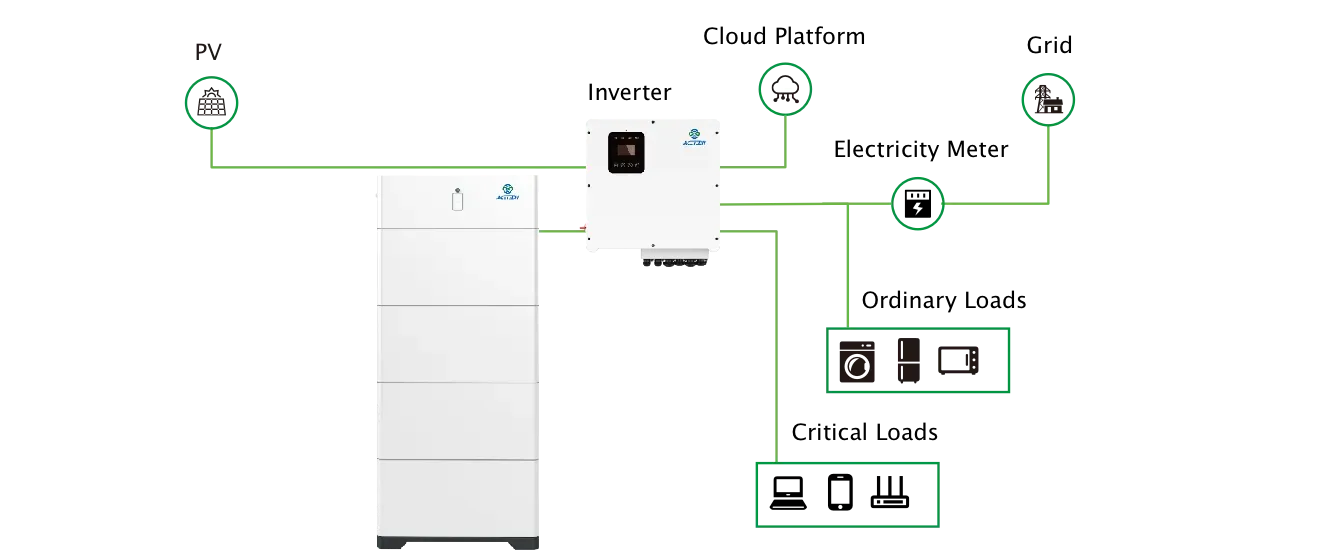
Successful battery energy storage system integration depends on how effectively these components communicate and operate as a unified system rather than standalone units.
Step-by-Step: How Battery Energy Storage System Integration Works
In practical deployment, battery energy storage system integration follows a structured but highly technical process, where system design, compatibility, and control strategy directly impact overall performance.
1. System Design & Load Profiling
Define energy demand based on real load profiles, peak demand, and usage patterns.
Key considerations include:
- Peak load vs average load
- Daily energy consumption (kWh)
- Backup duration requirements
Incorrect sizing at this stage can lead to underperformance or unnecessary system cost.
2. PV and Grid Integration Setup
Connect solar PV and grid inputs through the inverter or PCS.
At this stage, engineers must determine:
- AC vs DC coupling architecture
- Inverter capacity matching
- Grid interaction strategy (export, zero-export, hybrid mode)
3. Battery Configuration & Communication Integration
Configure battery modules and ensure seamless communication with the inverter and EMS.
Critical factors include:
- Voltage and capacity matching
- Communication protocol compatibility (CAN / RS485 / Modbus)
- BMS–inverter interoperability
Protocol mismatch is one of the most common causes of integration failure.
4. EMS Programming & Energy Strategy Optimization
Set up control logic based on project requirements:
- Solar self-consumption optimization
- Peak shaving and time-of-use scheduling
- Backup priority during outages
Advanced EMS strategies can significantly improve system efficiency and ROI.
5. System Testing, Commissioning & Validation
Verify system performance through real-time testing:
- Energy flow validation
- Response time and switching performance
- Safety and protection mechanisms
Proper commissioning ensures long-term stability and reduces operational risks.
This structured integration process not only minimizes deployment risks but also ensures optimal system performance, efficiency, and long-term reliability in real-world applications.
AC vs DC Coupling: Choosing the Right Integration Approach
When integrating a battery energy storage system (BESS) into a solar PV setup, selecting the right coupling architecture is critical to maximize efficiency, flexibility, and cost-effectiveness. In practice, BESS integration typically follows either a DC-coupled or AC-coupled approach.
DC-Coupled Integration
- Direct connection between PV and battery
- Fewer energy conversions → higher efficiency (typically 2–5% gain)
- Best suited for new installations
AC-Coupled Integration
- Battery connected via AC to existing systems
- Easier retrofit for existing solar PV systems
- Greater flexibility in system upgrades
Recommendation on AC vs DC coupling battery storage:
- Use DC coupling for new builds
- Use AC coupling for retrofit projects
Looking for more information about AC and DC Coupled Integration? Read our guide about AC vs DC Coupled vs Hybrid BESS here.
How BESS Integrates with Solar PV Systems
In residential and commercial projects, battery energy storage system integration with solar PV enables:
- Solar self-consumption: Store excess daytime energy
- Peak shaving: Reduce electricity costs during peak tariffs
- Time-of-use optimization: Shift energy usage based on pricing
A typical battery energy storage system integration architecture can be illustrated as follows:
Solar PV
↓
Hybrid Inverter / PCS
↓
Battery Storage System (BMS)
↓
Load (Home / Facility)
↕
Grid / Generator
According to the International Energy Agency (IEA), global energy storage capacity will need to expand roughly sixfold by 2030 to support wider renewable deployment, with battery storage systems accounting for the vast majority of that growth — underscoring the importance of efficient BESS integration with solar PV.
Grid, Generator, and Hybrid Integration Explained
Modern battery energy storage system integration supports multiple energy sources:
Grid-Tied Systems
- Enable energy import/export
- Support dynamic tariffs and grid services
Off-Grid Systems
- Operate independently
- Require precise storage sizing and control
Generator Integration
- Backup generators provide additional reliability
- Auto-start functionality ensures uninterrupted supply
Hybrid integration is increasingly used in both residential and small commercial projects.
Communication Protocols and Compatibility Challenges
A critical factor in battery energy storage system integration is communication compatibility.
Common Protocols:
- CAN
- RS485
- Modbus
Common Issues:
- Inverter–battery mismatch
- EMS communication errors
- Limited protocol flexibility
In many real-world projects, integration failures are caused by communication issues rather than hardware limitations. Below are common real-world issues encountered in integration projects:
Case 1: Communication Protocol Mismatch
In one residential retrofit project, the battery and inverter were both specified with CAN communication interfaces. On paper, this looked fully compatible. In practice, however, the system failed during commissioning.
The issue wasn’t the interface—it was the protocol mapping. The inverter and battery used different communication definitions, which meant they couldn’t correctly interpret each other’s data.
What happened in the project:
The system could not enter charge or discharge mode, and the energy management system (EMS) was unable to take control. Commissioning was delayed while engineers worked to diagnose what initially appeared to be a hardware fault.
How to avoid it:
Don’t assume compatibility based on interface type alone. During energy storage system integration, always verify:
- Protocol compatibility (e.g., CAN, RS485)
- Communication mapping and data points
- Vendor-specific integration documentation
Early-stage validation between inverter and battery suppliers can prevent costly delays later.
Case 2: Incorrect Inverter–Battery Sizing
In another hybrid system project, the inverter was sized for high peak loads, but the battery capacity was relatively small. While each component met individual specifications, the system as a whole was unbalanced.
What happened in the project:
During peak demand periods, the battery was repeatedly pushed into deep discharge cycles. This led to accelerated degradation, reduced cycle life, and noticeable instability in system performance.
How to avoid it:
Effective battery storage system design requires matching three key elements:
- Inverter power rating
- Battery capacity (kWh)
- Actual load profile
A properly sized system ensures the battery operates within a stable SOC range, avoiding unnecessary stress and extending lifespan. In BESS integration, sizing is not just a calculation—it’s a system-level decision.
Case 3: Improper EMS Configuration
In a commercial project using time-of-use (TOU) pricing, the hardware integration was completed correctly, but the system underperformed after deployment.
The root cause was not equipment—it was configuration. The EMS settings did not align with the local tariff structure.
What happened in the project:
The system failed to charge during low-cost periods and discharge during peak pricing windows. As a result, expected savings from peak shaving were not realized, significantly reducing ROI.
How to avoid it:
In BESS integration with solar PV, software configuration is just as critical as hardware selection. To optimize performance:
- Align EMS logic with local utility tariffs
- Configure charge/discharge schedules based on real usage patterns
- Regularly validate system performance post-deployment
A well-configured EMS turns a functional system into a profitable one.
These cases highlight that successful battery energy storage system integration requires not only correct hardware selection but also system-level engineering and configuration expertise.
Installation and Deployment Considerations
Effective battery energy storage system integration also depends on deployment conditions:
- Indoor vs outdoor installation requirements
- IP-rated protection (e.g., IP65/IP66)
- Electrical safety compliance
- System layout and space optimization
Modern systems simplify installation through:
- Modular design
- Plug-and-play architecture
- Stackable battery units
How OEM/ODM Solutions Simplify BESS Integration
OEM/ODM solutions play a key role in simplifying battery energy storage system integration:
- System co-design: Battery + inverter + EMS integration
- Protocol customization: Ensures compatibility across brands
- CAD-based engineering support: Optimized installation layout
- Pre-tested configurations: Faster commissioning
This reduces integration complexity and accelerates project deployment.
Why Choose ACE Battery for Battery Energy Storage System Integration
ACE Battery provides integrated BESS solutions tailored for real-world deployment:
- Scalable LFP-based systems
- Modular battery storage units and all-in-one designs
- Advanced BMS and EMS integration
- Hybrid inverter compatibility
- Proven OEM/ODM project experience
Our systems are designed for:
- Solar self-consumption
- Backup power
- Peak shaving
Conclusion: Choosing the Right Integration Strategy
Battery energy storage system integration is essential for building efficient, reliable, and scalable energy solutions.
By selecting the right integration approach and ensuring system compatibility, project developers and installers can significantly improve system performance, reduce costs, and enhance long-term reliability.
Planning a battery energy storage project?
ACE Battery supports EPCs, installers, and energy solution providers with fully integrated BESS systems and engineering support.
👉 Request a system design consultation or discuss your integration requirements with our team today.
Our expert will reach you out if you have any questions!